All math problems, whether they be algebra, geometry, probability, quadratics, or even simple computations, have always been an ordeal for me to solve. Numbers and letters blend together and my brain struggles to piece everything together. Additionally, I often have trouble wrapping my head around why some problems are necessary to solve as they seem to be bringing more confusion than good…but I could rant about this for the rest of my blog and is simply a me problem.
I read through a math problem once, attempt to process all the numbers in my head without writing them down, quickly try to solve and then either arrive at the wrong answer or no answer at all. I then try again. And again. Maybe once more. I’ll think I come close and then…still nothing. I rush through the problem, overwhelm myself with intimidating numbers, variables, expressions, and equations, and in the end, belittle my intelligence, and only frustrate myself more. I will stare at problems for hours, scribble down notes, and relentlessly ask teachers or anybody nearby to sit with me until I know I have figured out the problem. I find myself embarrassed by the string of questions that pop into my head but repeatedly ask them anyway. It’s quite the mental battle. This is why I was an English major and not a math major at Bates. However, math has a funny way of resurfacing and here I am studying for the GRE so I need to face my fate. Math needs to return into my life.
Now why is math relevant? I ask this question very often but actually reflecting upon the way I think through math problems helps me improve my own teaching strategies here in the Czech Republic. While studying for the GRE, I am slowly learning to “pauza,” scaffold my thinking or break down the problem, draw out diagrams and walk through the numbers in smaller, more visual, steps. This process takes more time and patience but I eventually arrive at the correct answer. Finishing a set of problems accurately becomes a possibility.
While not a verbal foreign language, for me, solving math problems feels as though I am trying to comprehend a foreign language. The process that I am training myself to follow as I work through, in my eyes, complicated quantitative reasoning questions for the GRE is one that I can translate to my approach to teaching American English for my Czech students this year.

I wrote in my Fulbright application that I will encourage students to use visual, kinesthetic, and auditory modalities to explore the complexities of the English language. From previous teaching experiences with non-verbal and E.L.L. students, I have found that multi-modality exposure, whether that be through the use of movement, visuals, or music, establishes engaging lessons for all. Hence, I also emphasized that becoming well-versed in students’ personal learning goals is an essential component of a beneficial teaching and learning environment and one that I will strive to establish in any classroom. Now, statements such as these are nice, but as I keep learning how to teach English to non-native speakers, I am realizing they are very idealistic.
I still think the use of multiple modalities is essential for any lesson plan. However, becoming “well-versed in students’ personal learning goals” has proven very difficult – especially when I see roughly 300 students over the course of 20 lessons only once per week. What’s more – September has been a month of transition, trial-and-error, and back-and-forth travel – there has yet to be one week where I am in the same place for all seven days.
During my first week of teaching, I gave the same 45-minute presentation about myself and my plans for the year to all of my classes. I talked for roughly 40 out of the 45 minutes, briefly asking if students had any questions after each slide and then I left the final 5 minutes for questions about the entire presentation. The students smiled and even giggled as I appeared very energetic and enthusiastic while hoping to express to them my approachability and eagerness to learn how to communicate with them effectively this year. Since I was on the boating trip in Česky Krumlov last week, I had yet to see my Monday and Tuesday classes and meet those students. Therefore, I gave the same presentation about myself as my first Monday lesson this week and, for the first time since being here, was given some feedback and advice about how to structure lessons for Czech students who are learning a language that is not familiar to them.
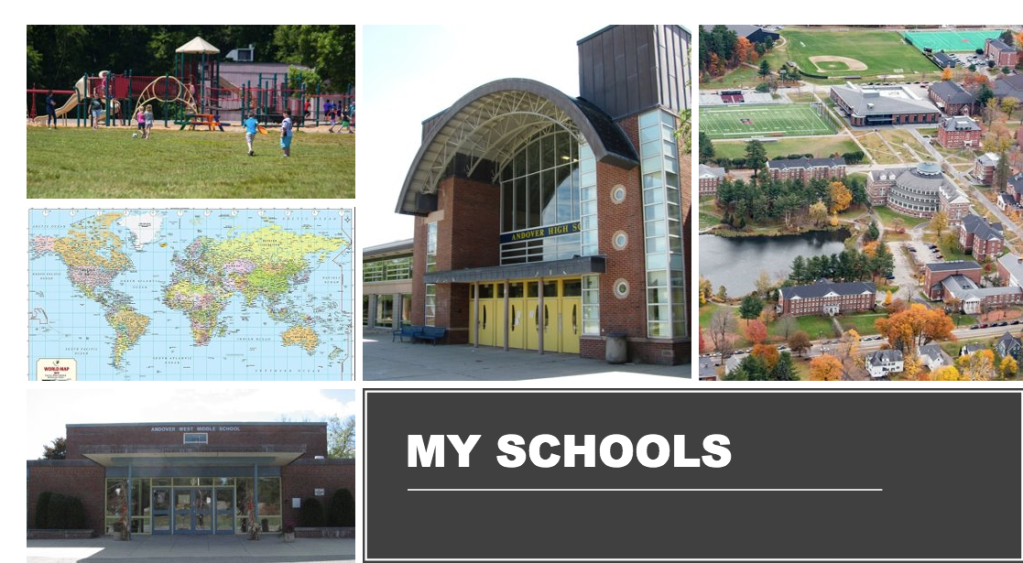
I learned that what I may think to be a slow and exciting presentation appears confusing, and at times, hard to follow, for students – certain words, phrases, and dialects are harder for students to think about and understand. When the students appeared silent after my presentation I was told that it was not because they did not have any questions – they didn’t feel comfortable, or were unsure of how to ask. While I thought I was leaving plenty of time for questions, and creating a lively and detailed presentation about my family, hobbies, schooling, travels, and plan for the year, I was overwhelming the students with information.
She shared with me the most important rule of teaching: less is more. This concept is one that I have always failed to fully grasp – my brain processes information too quickly, and, sometimes, important steps toward success are skipped (math!!!). I did the same for my first lesson – I channeled my nervous energy into explosive enthusiasm and wasn’t leaving enough time for students to process my words and come up with some questions for me. This was the first piece of feedback I had been given and was relieved and thrilled – I know that I am not a perfect teacher – how could I be as this is my first year? Before this feedback there was an unspoken disconnect and I was moving too quickly to fully empathize with my students and understand their confusion.
All in all, time to pauza, reflect, and then, try again, is an essential to my growth as an educator (and math student…) so I not only took this feedback to heart, I asked more questions about what units I should cover, what types of exercises will be tested at their end of year exams, how fast or slow should I speak – questions that finally give me a sense of how I can approach students’ personal learning goals when I am not able to meet with each and every one of them one-on-one during the lesson or after school.
I had about 45 minutes between my first and second lesson on Monday and I decided to use this time to rethink and reorganize my introductory presentation – instead of pouring information about myself on my students, I gave only bare minimum details about topics such as my family, hobbies, favorite American holidays, travels, and schooling. Then, I wrote a list of headings that mimicked those of my slides and thought of questions students could ask me about the topic I had just presented. When I presented my introductory lesson in my next lesson that Monday, I relayed only simple details about the information on the slides, paused, and waited for students to ask questions that would prompt me to speak about the topic in more detail. This way students felt as though they were part of the lesson and then could practice their auditory and verbal English language skills. This newly structured lesson not only ensured that I was not speaking for the entire 45-minute block of time but also engaged each and every one of the students by prompting them to speak out loud, ask me questions and learn from my answers. I was still energetic and appeared approachable. However, I was also able to reach my students by slowing down my excited speech and inviting them into my pedagogical framework focused in the fine art and challenge of effective communication practices.
This week I was also able to meet with some students – and their families – after school. I met one student and her aunt for a 12-kilometer run, starting at her neighborhood close to our school and looping around a beautiful, rural village called Ropice not too far away. Here, I was able to talk with my student and her aunt and learn about their family life and interests while also having fun and getting to know them more as individuals outside the classroom. My student’s aunt provided me with a list of nearby village races that we can participate in together. Racing was a part of my life that I thought I forever left behind but have quickly realized how much I appreciate the friendly comradery and supportive atmosphere that follow these competitions. I also met with this student’s mom and sister at a patio outside their charming home. I learned that her sister, another one of my students, loves equestrian and visits her horse to ride most weekends in Ropice.
At my students’ home, I learned that their mother is also eager to practice her English with me so I agreed to visit often and help her by simply prompting conversational questions outside with tea. Being surrounded by a genuine family reminded me about the importance of family when navigating new, or even every day, routines. My American family is 4,000 miles away and often when I am sitting by myself in my flat or trying to figure out how to pay my Czech bills, it is very easy for me to feel not only lonely but also awestruck at my new reality and in denial about the impossibility of seeing anybody close to home anytime soon. Nonetheless, slowly my students and their families are helping me bridge my American life with my new Czech friendships and routines – they are helping me secure my roots in both homes.
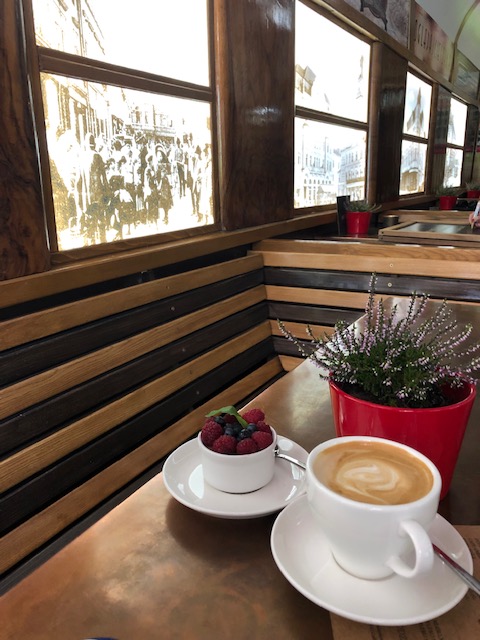
I also met with a student after school at Avion café – a café right on the Czech and Polish border of my city – to help her with her English speaking. We sat in the café for an hour. I had the student practice her speaking by first writing down what she wanted to say, correcting these written sentences, and then speaking them out loud with her. Then, similar to how I structured my new introductory lesson, I asked her questions about each written statement. These questions were meant to prompt her to speak in the correct tense and provide details with newly learned vocabulary words. By the end of this one-on-one lesson, the student sweetly expressed very sincere gratitude for my time and availability this year. She also gave me feedback about my lesson – student feedback is especially important for me because they are the ones receiving the lessons!
Her feedback ensured me that all students are excited by my enthusiasm and are always asking their teachers if they can have me for more lessons – they are excited to keep learning from me and are working up the courage to become more vocal before, during and after class. This student also told me that she had never spoken or practiced her English with anybody besides herself so the fact that she feels comfortable enough to meet with me and open up to me speaks volumes to how appreciative everybody at the school is for my time this year. Her kind words not only melted my heart a bit but also brought upon another huge sigh of relief – as I keep learning how to organize and present my English language lessons for my students – their patience, empathy, and excitement will not only help my presentations but inspire me to keep improving and figuring out the best ways to effectively communicate and help them.
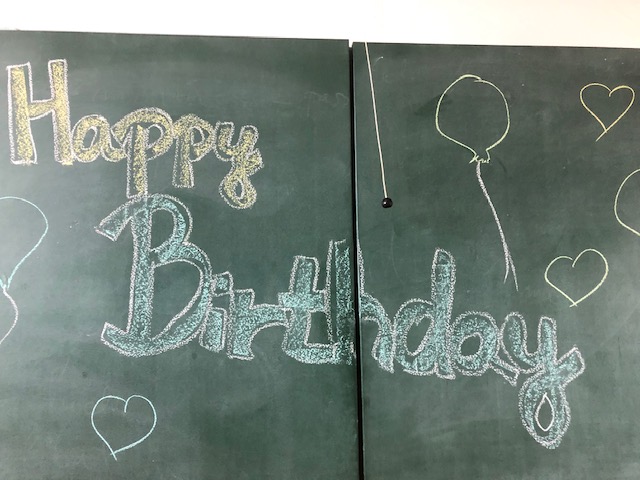
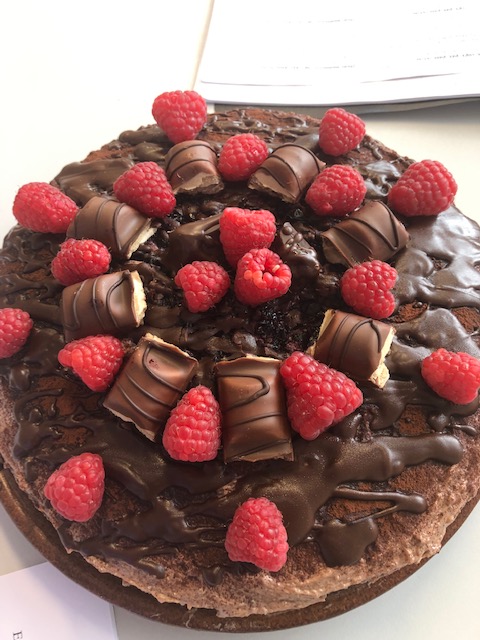
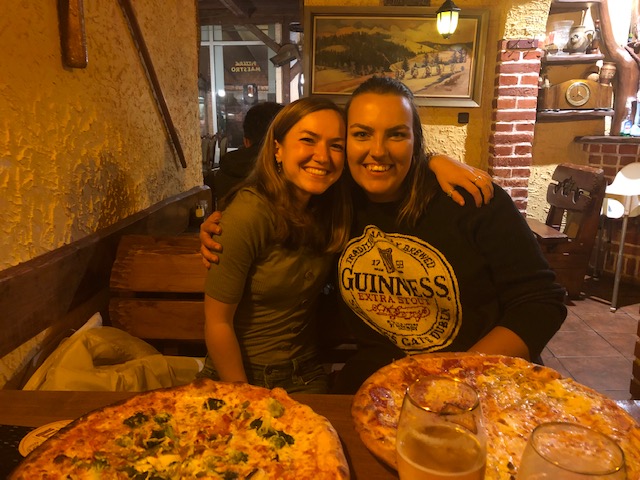
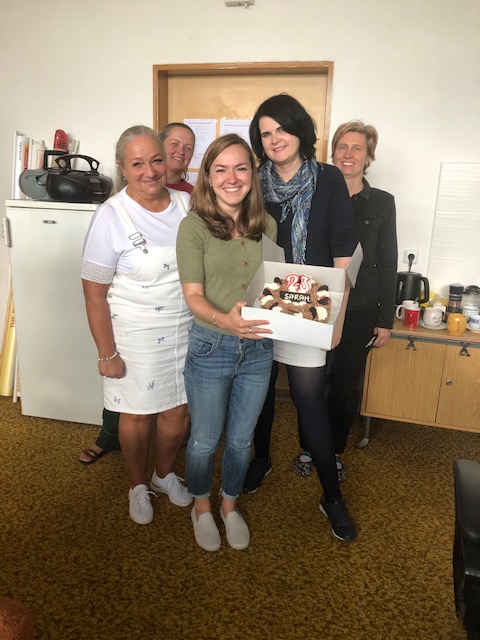
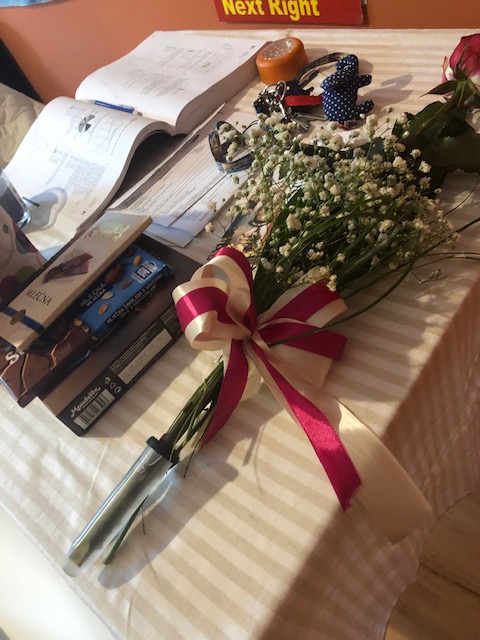
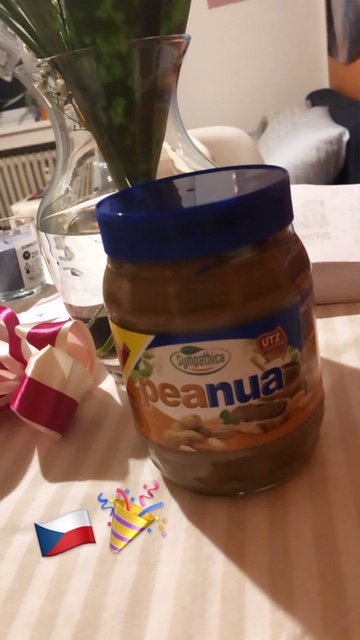
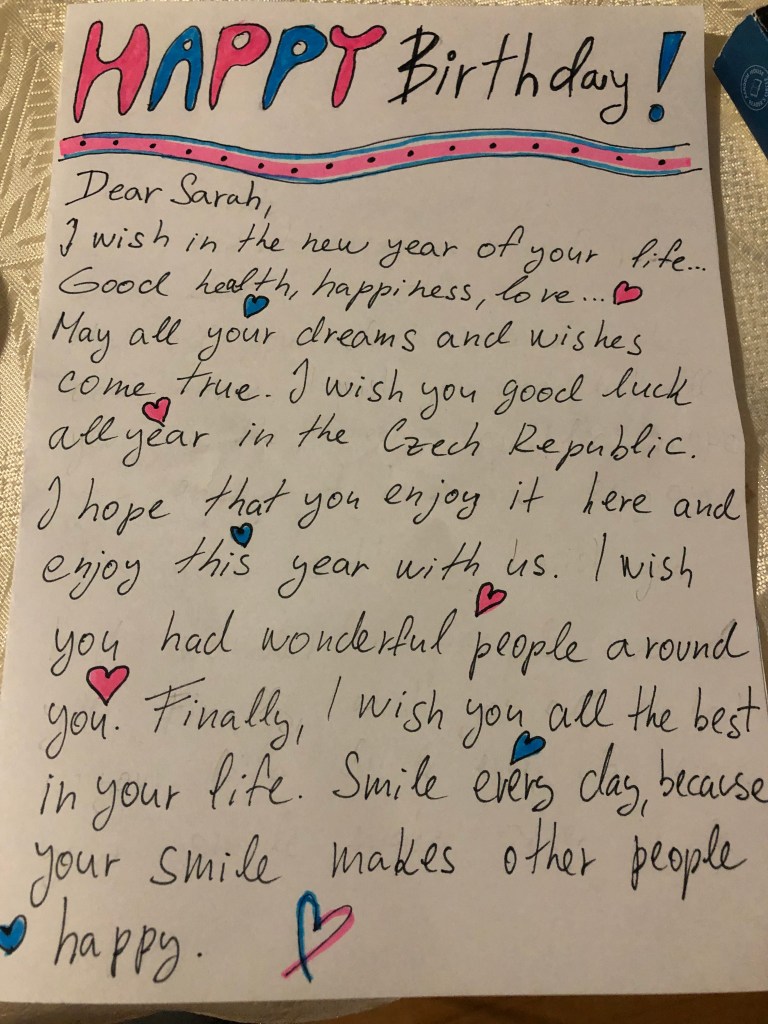
Finally, my birthday was this past week and it was the first birthday I was not able to share with my family. I was worried how the day would pan out but my school community, and new Czech family, exceeded my expectations. The teachers and students sang, made cakes, and brought me lots of chocolate, some jewelry, and even a stuffed elephant and a couple jars of peanut butter. I also went out with a fellow Fulbrighter and another friend for pizza, and of course Czech beer, in the town square and received several thoughtful gifts, cards and calls from loved ones back home. Everybody also congratulated me all day, and gave me two kisses on my cheek – a Czech birthday tradition, signifying a celebration of another year you have survived!
My birthday marked an important day of reflection for me; here, in Česky Têšín I am growing respect amongst peers, students, and friends and cultivating a community where we collaborate and learn from each other. My sister studied abroad in Dublin, Ireland last year and told me there will be a point when you step into your city after a day of work or travel and will feel an immediate sense of relief because you have found your way back home – this feeling has become real for me already.
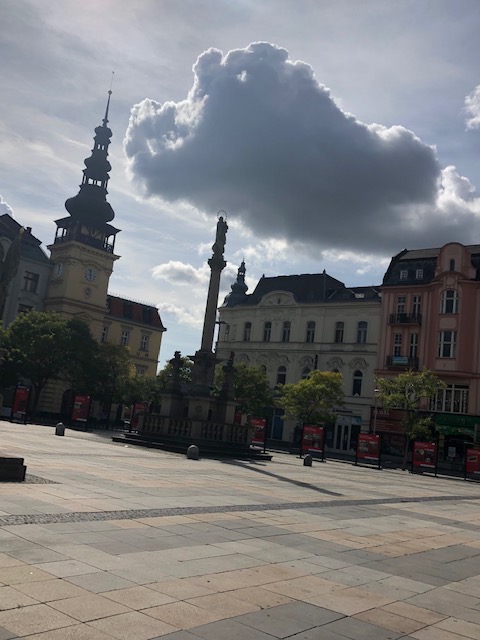
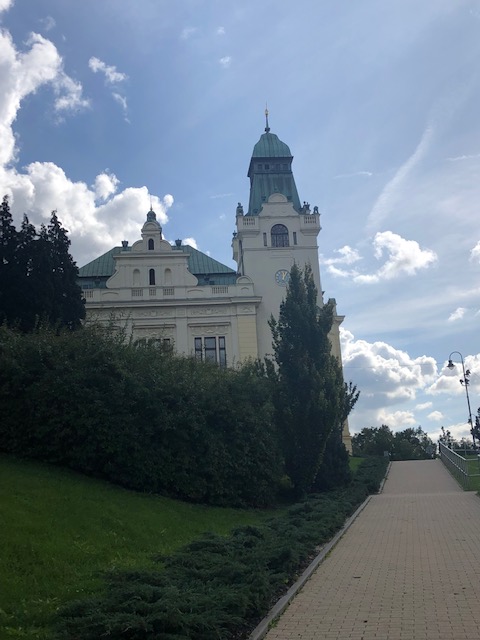
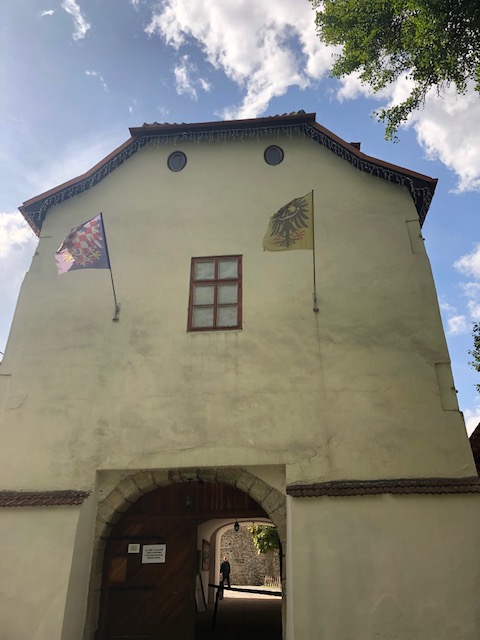
Finally…I recently visited Ostrava and conquered the Czech railway system by myself for the first time. Here, I learned about a conversational course I can lead for locals once a month in Prague and Ostrava. It should be a great opportunity for me to keep learning how to teach and speak to non-native English speakers. And now I am off to Prague from Sunday September 22-Wednesday September 25 where I will embark on another Fulbright orientation to learn more about Czech culture, diversity and politics in addition to a formal event at the house of the U.S. ambassador. I will be reunited with my fellow Czech Fulbrighters and will even get to meet some other Fulbright research students. I look forward to sharing this experience with you next week – until then – Na zdravi! Take time to pauza. Slowing down our crazy busy lives is hard when there is so much going on and so much to see and experience – but…it’s definitely worth it.
 Redefining Escape