When I was in the eighth grade I was assigned to read Harper Lee’s To Kill a Mockingbird. Almost immediately, I was extremely confused by the language and story. Lee’s novel was definitely my most challenging read to date. Then, after slowly stumbling through the beginning of the story, I arrived at the trial of Tom Robinson, a black man falsely accused of the rape and assault of Mayella Ewell, a young woman in the community. Lee characterizes Tom Robinson as a generous man with a family who always thinks of others before himself even when everybody in society, besides his attorney, Atticus Finch, is completely against him. While I still found the book difficult, once Tom’s trail began, my eyes were glued to the pages until I reached the end. I needed to know that Tom was going to be ok and couldn’t wrap my head around the false accusations and how poorly he was being treated. I had never read a book that challenged my thinking and was captivated by Atticus Finch’s fight for Tom Robinson’s innocence in spite of the opposition posed by his surrounding community.
Now, something else that resonated with me was the fact that Lee decided to tell the story from a child’s perspective. Atticus’ daughter, Jean Louise “Scout” is an adult at the time she is narrating the book but the story is told from her perspective as a young child from the ages of about six to nine. As noted in previous blogs, I have always held a soft spot for children because they see the world differently; they have an ability to catch the nuances of life and, often amusingly, shape their opinions with an uncanny memory of what they have learned over time. Scout is narrating To Kill a Mockingbird at a time when her innocence can’t quite understand racial and social injustice. However, with the help of her wise and humble father, she is able to vividly guide her readers through her journey toward empathetic compassion.
I am currently rereading To Kill a Mockingbird and find myself now able to appreciate the beginning of the story just as much as the climax. The ability to truly appreciate challenging literature sometimes takes time and patience. Recently, I read a scene from an early chapter that has stuck with me as I think about my life in Česky Têšín. During this scene, Atticus says to Scout, “You never really understand a person until you consider things from his point of view…until you climb into his skin and walk around in it.”
These words not only foreshadow the ultimate moral of To Kill a Mockingbird but also pose a connection to my entire Fulbright experience thus far. These words perfectly capture the most important tenets of education…and living in a foreign country with a language barrier: Empathy, compassion, flexibility and patience. These are essential aspects of my cultural immersion and are aspects I look to find throughout my entire day. These are the keys to my life in Česky Têšín. Everybody has a story that deserves to be heard and as Atticus tells his daughter, these stories can’t be understood unless truly considered from his or her perspective.

As I have worked on adjusting to my routine in the Czech Republic, teaching and living on my own for the first time in Česky Têšín, I have expected empathy to simply walk into my life. However, this was unreasonable of me to think and I also have to practice what I hope for – I need to understand my community and consider the culture by walking, exploring, and challenging myself to talk with people in their native language. I walk into stores immediately saying “Hello!” without even thinking that this may be disorienting for people who don’t feel comfortable with their English. I am definitely improving but I still wake up every morning with the goal of being more mindful of others in my community…even when I find myself frustrated with cultural differences and the language barrier.
As always, I love working toward my goals in the classroom. So, this week I decided to share the importance of empathy with my students. I decided to teach the history of American literature through a collaborative scavenger hunt about famous authors and their personal writing styles. When planning this lesson, I wanted to ensure that a major takeaway would be the importance of understanding the history that surrounds an author and their stories. I hoped that the students would dive into the readings and get to know important American literary figures and how they were shaped by history and their upbringing. This topic aligns with my thesis from last year as I studied how Charles Dickens integrated aspects of his traumatic childhood into all of his novels as a way for him to curate this trauma…I spent over a year writing 200 pages about this topic…I knew it would inevitably come up and need to be shared in some way with my students here in the Czech Republic 🙂 The lesson went well and many students even asked for copies of books such as Of Mice and Men and The Catcher and the Rye. They are slowly but surely sharing my love of American literature.

I also gained a better understanding of how hard it can for students to practice their English speaking while judging my school’s English competitions this week. Participating students were given a topic to talk about for 3-5 minutes and I asked them questions meant to prompt more detailed and elaborate responses. I then evaluated their vocabulary, grammar, and pronunciation according to their year and level of study with a couple other English teachers. Some students were shaking they were so nervous. I think very highly of my students’ English abilities and always find myself assuming that speaking with me should be no problem. However, as I watched the students nervously walk into the competition room, I thought about how even when I walk into a grocery store and simply have to say “Dobry den” I stutter and often revert right back to an English “Hello” or “I’m sorry!” I have never had to think too hard about my speech because everybody has always spoken my same language. Now, I realize just how scary it can be speaking in a new language so it was nice to see how excited and relieved students were after I gave them words of encouragement upon finishing the competition.
Speaking is the most difficult and important part of language learning. We all need to speak to people every day. English is a tough language to learn and we all make mistakes; I even have trouble speaking in English from time to time. The key is being able to understand each other to learn, gain confidence and move forward. This week I held some private lessons with students from the American Corner in Ostrava, and while these students are definitely not as shy about speaking, they still apologize after every mistake. They ask me very specific grammar rules that sometimes I have to take a moment and think harder about. During these one-on-one sessions with students, I always make sure to note their progress and remind them that their English is worlds better than my Czech which simply includes greetings/goodbye, thank you, some items, and the phrase: Jak se más? followed by Mám se fajn. The fact that we are able to have a conversation in English beyond simple hellos and goodbyes is all we need to start learning and practicing together.
My Czech language learning is simply just from the mistakes that I make when trying to speak in stores and the questions that I ask of Roman and Pavlina. While most of our day-to-day conversations are in English, I always greet them with a Jak se más to practice my pronunciation and then from time-to-time I will work up the courage to try and speak a new vocabulary word. My Czech learning is SLOW but hey I am just constantly speaking, laughing, and exchanging intercultural conversations and experiences. This year I have found just having patience, confidence, and the willingness to help each other is the key to learning and practicing a foreign language.
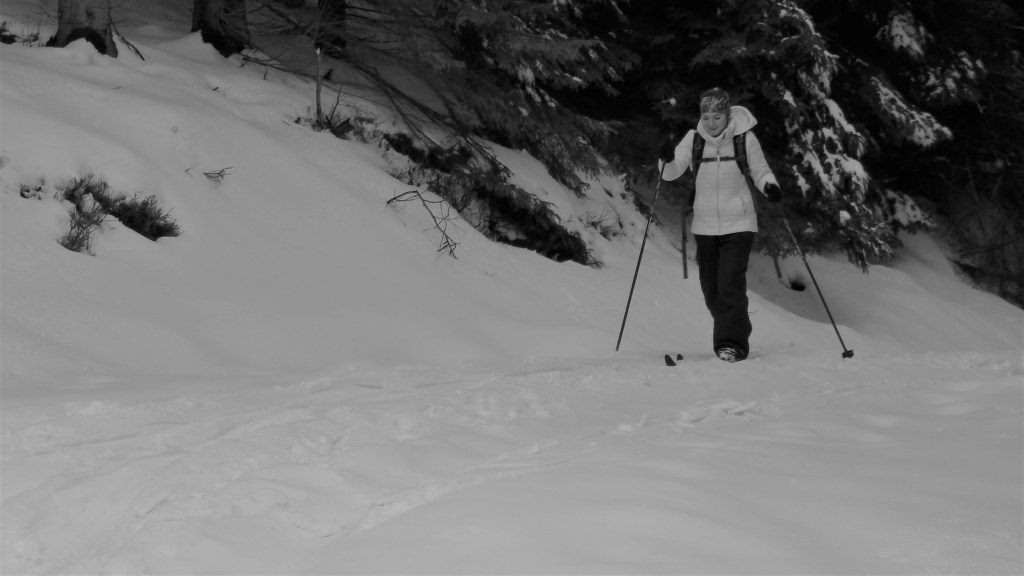
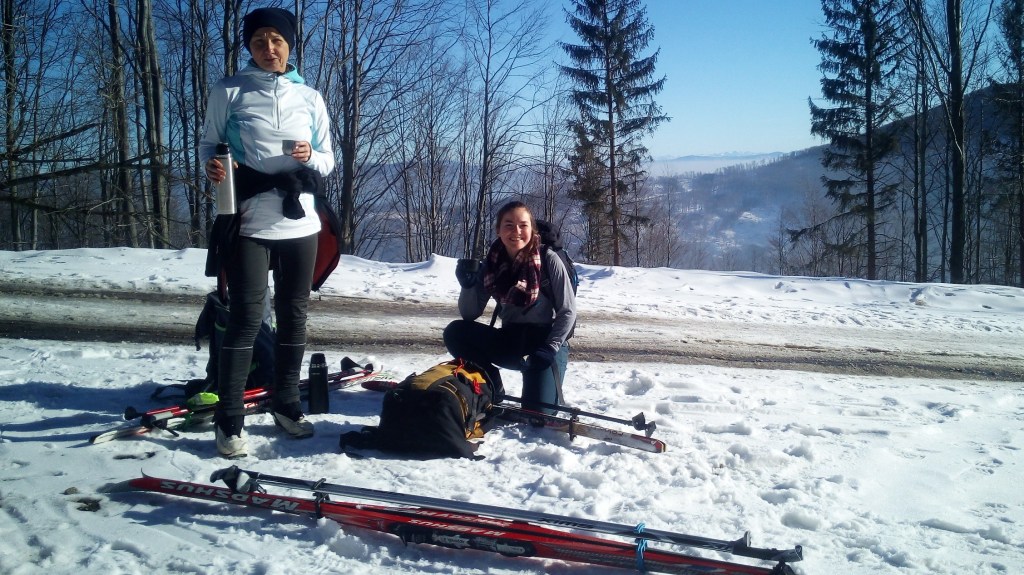
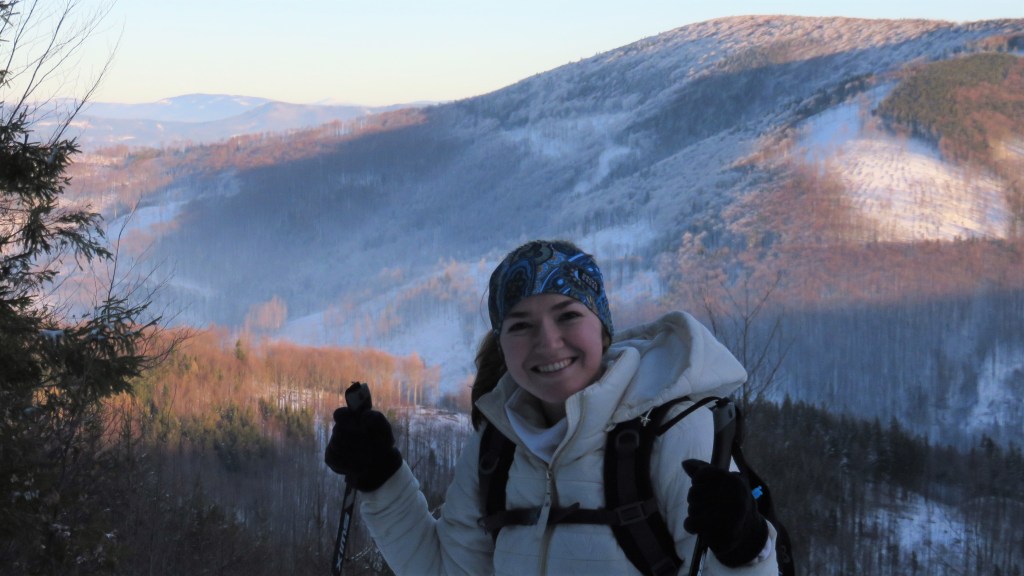
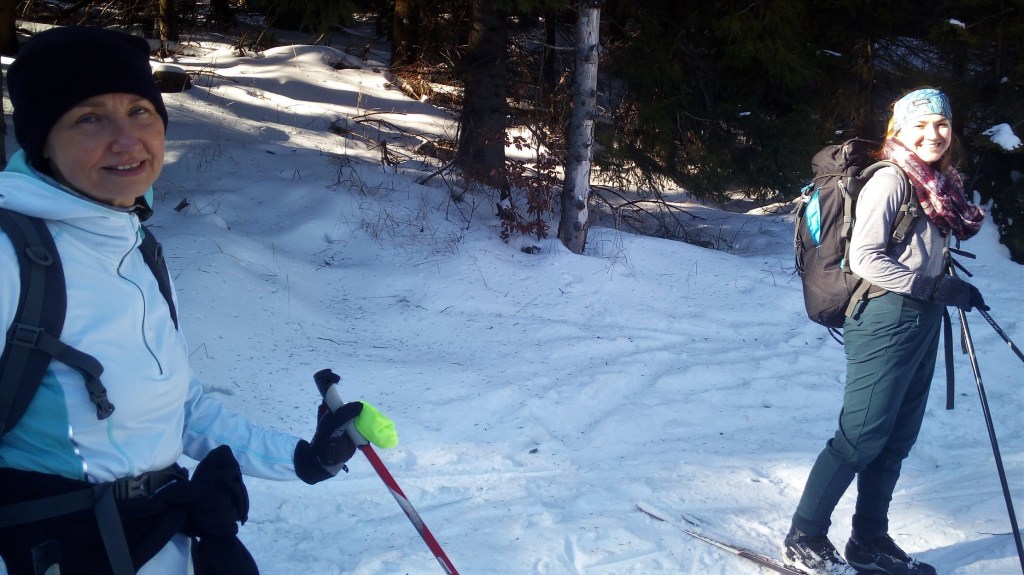
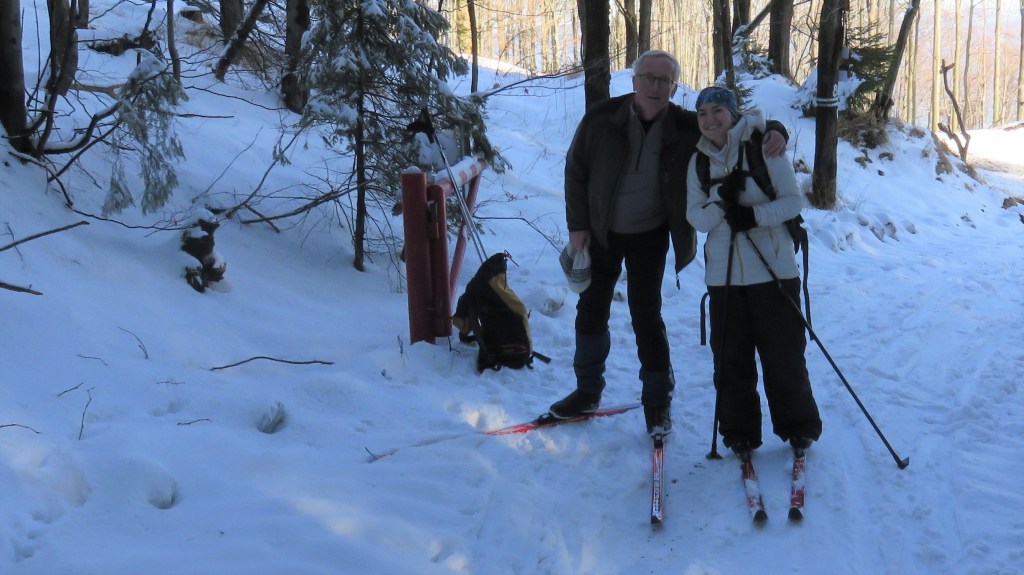
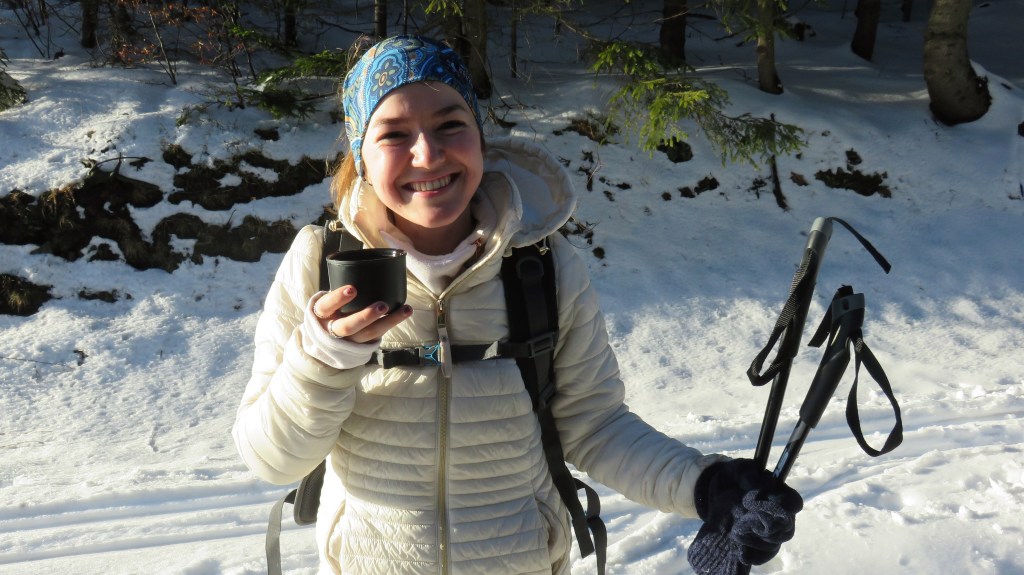
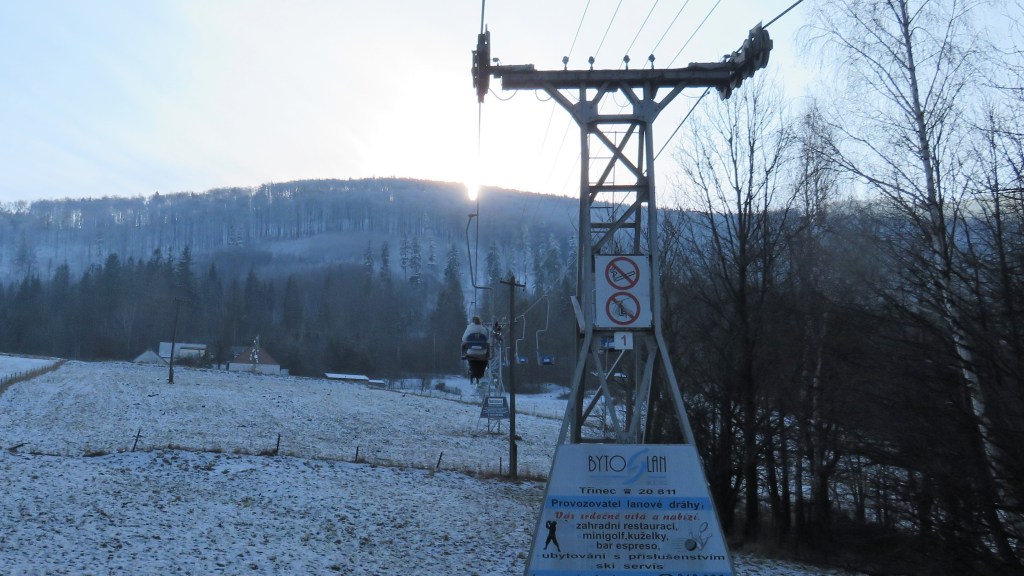
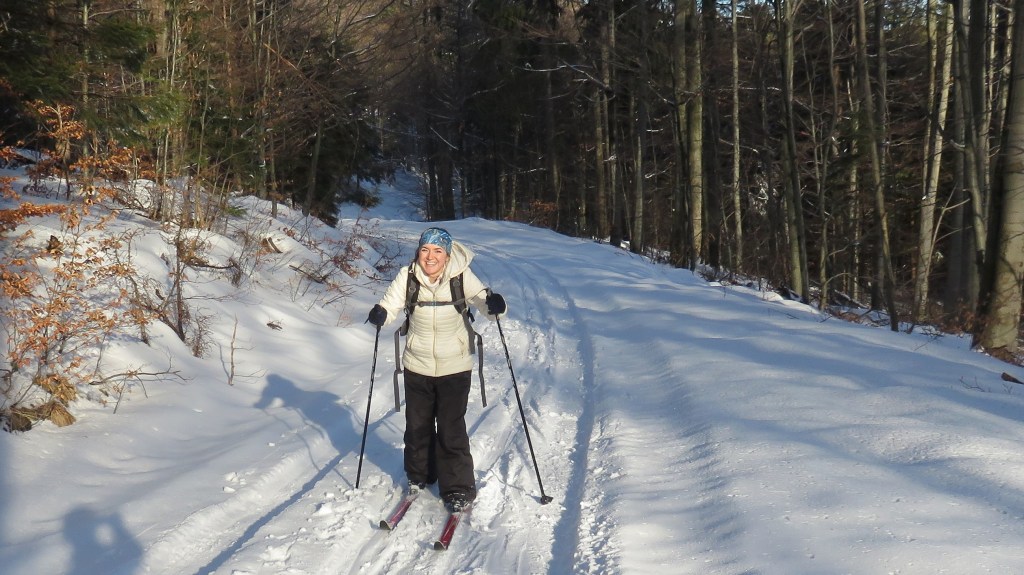
Finally, I couldn’t end this blog without talking about another difficult but very rewarding first for me this week…of course in the mountains 🙂 Tuesdays are always my lightest days at the school so after my last lesson, Roman met me at my flat, we picked up Pavlina and headed to the mountains to cross-country ski. The form for cross-country skiing felt very new for me as I have only ever been downhill skiing. But, after many falls and laughs I was able to feel more confident by the end. The views were beautiful and I shared some more special conversations with Roman and Pavlina. The funniest part, and honestly still feeling it a bit as I type this blog, of the day was when we had to find our way down the mountain without access to the cable car. I had trouble walking down without falling on the ice so I decided to scooch down a ski slope in the dark. Yikes is all I have to say but it was another family adventure and one I truly will never forget. We went for a second trip on Saturday morning and I could already see so much more improvement, felt much stronger and again could not get enough of the views, fresh air and energy.
While on the mountain, overlooking one of the views, Roman told me that when we all spend time together it feels like “Déjà vu” because it brings him back to past family adventures. This meant a lot to me because these adventures are also a sort of déjà vu for me. This trip in particular reminded me of when I learned how to ski with my dad, grandfather, brothers, and cousins. We used to ski together in the White Mountains, specifically in Waterville Valley – I was known as the “young girl in pink” as I always wore a bright pink snow suit and slowly, but not so gracefully, made it down the slopes. My brothers would always hockey stop and spray me with snow as I was waiting in line for a chair lift and laugh as my hair was blanketed by snow. My dad would brush off the snowflakes and always stay behind to watch me because he knew I was a nervous skier and didn’t want me to feel alone with my crazy brothers and cousins. While I was never a great skier, these were some of my favorite childhood memories and it is such a blessing to be able to return to the mountains and share some new memories with my Czech family. Another important key to my life in Česky Têšín.
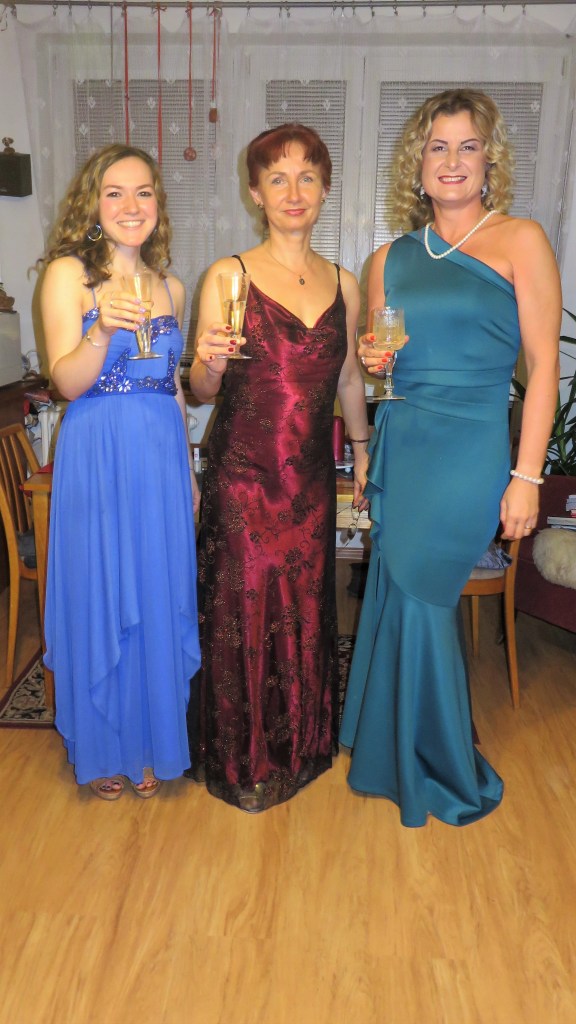
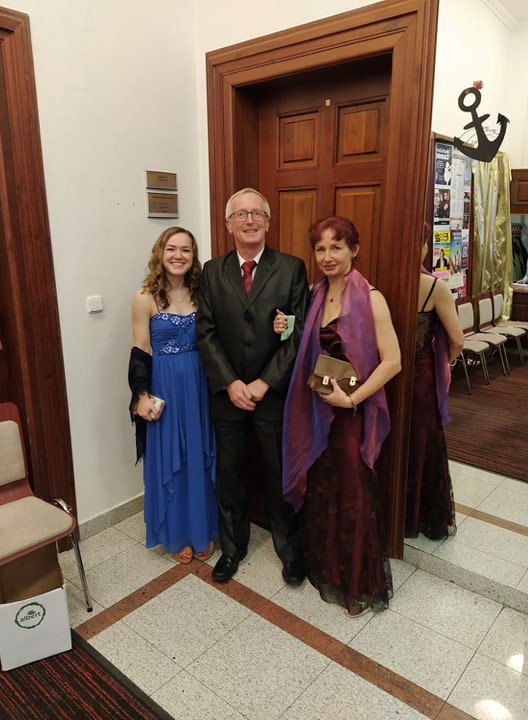
Finally, this weekend I was in the mountains early in the morning then played princess in the evening as I attended another ball put on by my school. Here, I brought out my old prom dress, watched some student dances and even learned the national dance of the Czech Republic – Polka! I definitely dance with two left feet but I can add it to my ever-growing list of new cultural experiences. The keys I have discussed in this blog help me unlock so many different doors to unimaginable and unexpected adventures. Who’s to say what’s next but I will be sure to report in the next blog 🙂
So, what’s next? I will only be teaching at the gymnasium Monday and Tuesday and then I will be off to Chateau Liblice, a village in the Central Bohemian region of the Czech Republic. Here, I will attend my last Fulbright conference in the Czech Republic before our final meeting in June. I’m looking forward to another adventure, exploring a place I would never imagine or know about visiting last year, and of course, reuniting with my Fulbright family. The adventures, firsts, and people I am constantly meeting continually blow my mind and I look forward to sharing my update from this Bohemian Chateau. Until then, ahoj! Get out to those mountains, no matter your location or find your own keys to some adventures. While on the mountains for me, the views and memories are always priceless 🙂
 Redefining Escape